



In recent years, we have been hearing the phrase “insurance premiums have increased” more and more often. And indeed, the cost of insurance has been directly affected by inflation, the sharp increase in construction and repair costs, as well as rising costs in private healthcare.
However, there is another, far more important side to the discussion: What does being underinsured or having no insurance cover at all really mean for our household finances?
Because the true cost of insurance is not simply the premium we pay each month or each year. It is also the potentially significant amount we may have to find ourselves if something serious happens.
In this article, we look at two of the most important types of insurance in our everyday lives: home insurance and health insurance.
Home Insurance: What would happen if we loose our home tomorrow?
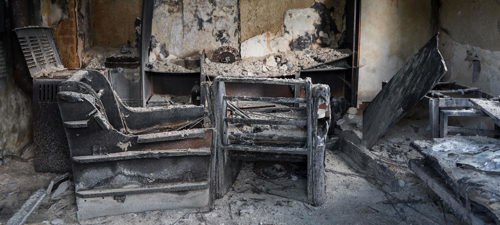
A home is not simply a property. For most people, it is the largest asset they will ever own the result of years of work and savings, their family home and an important part of their financial security.
Let us imagine, therefore, that a major fire or a devastating earthquake causes extensive damage to your property.
At such a moment, the question is no longer whether the annual premium was expensive.
The real question is: “If I had to rebuild my home today, could I actually afford to pay for it myself?”
Rising reconstruction costs & the risk of underinsurance.
In recent years, the cost of building materials, labour and construction work has increased significantly. As a result, a property that was insured several years ago for a specific sum may now be underinsured, because the amount required to rebuild it today may be considerably higher.
Adjusting the sum insured to reflect current reconstruction costs will also result in an increase in the premium. However, this adjustment is essential to ensure that you have an adequate level of protection when you actually need to make a claim.
How does underinsurance work in practice?
Let us assume that you own a 100 sq.m. apartment. The current cost of rebuilding the property, based on today's construction and labour costs, is €170,000, while the property was insured five years ago for €120,000.This means that the property is insured for only 70.6% of its actual reconstruction cost.
What happens if a loss occurs?
In the event of a partial loss of €50,000, the insurer may pay only €35,300 due to the application of the average clause, leaving you to cover the remaining €14,700 yourself.
Similarly, in the event of a total loss, the maximum amount payable would be limited to the sum insured under the policy €120,000, leaving you to find the remaining €50,000 required to rebuild the property.
This is why proper home insurance does not simply mean “I have a policy.” It means ensuring that the sum insured and the covers selected reflect the current cost of rebuilding the property and the actual risks you need to protect against.
Health insurance: When an unexpected hospitalisation becomes a financial problem.

Health is perhaps the clearest example of a risk that cannot be planned for. Today, we may be perfectly healthy. Tomorrow, we may need a medical examination, hospitalisation or surgical procedure.
The cost of private healthcare has increased significantly in recent years. Data published by the Hellenic Association of Insurance Companies (HAIC) has highlighted, among other developments, significant increases in medical fees and hospital-related expenses.
A realistic example of how health insurance can protect you.
Many people wonder whether it is really worth paying for a health insurance policy for 30 or 35 years, particularly when premiums are gradually adjusted due to age and medical inflation.
Let us consider a representative example of an insured person from the age of 35 to 70.
Starting at the age of 35, they pay an initial annual premium of approximately €500 around €42 per month until the age of 50.
Between the ages of 50 and 60, age-related adjustments increase the annual premium to approximately €900, while during the following decade, from 60 to 70, when the likelihood of hospitalisation increases, the annual premium gradually reaches around €1,500.
Over these 35 years, however, life can bring unexpected health events.
At the age of 42, the insured person requires emergency treatment for acute appendicitis, including hospitalisation, surgery, medical fees and hospital expenses, with a total cost of €7,000.
Several years later, at the age of 53, they require a three-day hospital stay due to acute gastroenteritis and severe dehydration, including ongoing diagnostic tests and treatment, with the total cost reaching €3,500.
Finally, at the age of 62, they face a much more serious challenge: a diagnosis of breast cancer requiring a comprehensive treatment plan, including mastectomy, reconstructive surgery, chemotherapy, radiotherapy, targeted therapies and specialist diagnostic tests such as PET scans, CT scans and biopsies, with a total cost of €45,000.
The total cost of the hospitalisations and treatments required throughout this journey amounts to €55,500.
The financial difference between having private health insurance and having no private cover can therefore be substantial.
Without private health insurance, the insured person would have to cover the entire €55,500 from their own savings, potentially putting their financial stability at serious risk at one of the most vulnerable moments of their life.
Major Risks You Should Not Ignore

There are three critical factors that make private health insurance an important part of long-term financial planning.
1. The risk of waiting & your medical history.
One of the most important factors considered when applying for private health insurance is the applicant's health and medical history at the time of application.
If we wait until a symptom, diagnosis or medical condition appears before seeking insurance cover, our options may already be significantly more limited.
Insurance companies assess an applicant's medical history as part of the underwriting process. Depending on the circumstances, pre-existing medical conditions may be excluded from cover, additional terms may apply, or an application may not be accepted.
One of the best times to arrange health insurance is while you are still healthy, because this is when you generally have the widest range of options for securing protection for the future.
2. The risk of cancelling your policy.
If you cancel an existing health insurance policy simply to save money in the short term, obtaining new cover in the future may become more difficult.
If your health changes during the period without insurance, a new application will generally be assessed based on your health and medical history at that time. This may result in different terms, exclusions or, depending on the circumstances, an inability to obtain the same level of cover.
A short-term saving could therefore result in a significant loss of protection in the future.
3. The reality of the public healthcare system.
The alternative of relying exclusively on the public healthcare system can also involve significant challenges.
Depending on the type and urgency of treatment required, patients may face long waiting times, queues in outpatient departments and emergency services, as well as pressure on available hospital infrastructure and intensive care capacity.
Private health insurance can provide access to private healthcare facilities and treatment options, subject to the terms, limits, exclusions and conditions of the individual policy.
The role of an insurance advisor in one of your most important financial decisions.
In an environment where costs and circumstances continue to change, the role of an insurance adviser becomes increasingly important. Insurance is not a product that should simply be purchased once and then forgotten.
The value of your home changes. The cost of reconstruction changes. Your family's needs change. The cost of healthcare changes. And a policy that was adequate five or ten years ago may no longer provide the same level of protection today.
What can we do for you free of charge?
- Review the sum insured for your property and identify any potential risk of underinsurance.
- Assess your family's actual needs and recommend an appropriate combination of covers for health and property.
- Analyse your policy's excesses, limits and exclusions so that you understand exactly what is and is not covered.
- Support you throughout every stage and assist with the management of any claim, hospitalisation or insurance matter.
At a time when almost everything is becoming more expensive, the question is not only: “How much has my insurance premium increased?”
The more important question is: “How much could it cost me to be without insurance when I actually need it?”
Don't leave your financial security to chance. Contact us today!
Επιστροφη